

Author:yilida Time:2026-10-04 11:24:52 Number of views:138Second-rate
In heavy industrial production, the difference between a compliant, profitable plant and one plagued by shutdowns often comes down to a single invisible system: dust control. A large offline baghouse stands at the top of the industrial dust collector hierarchy, engineered for the highest air volumes, the heaviest dust loads, and the strictest emission limits. When a manufacturing line moves tens of thousands of cubic meters of dusty gas every hour, an undersized or poorly designed collector becomes the weakest link in the entire operation.

This guide explains what a large offline baghouse is, how its chamber-by-chamber cleaning cycle works, where it outperforms other collector types, and how to specify the right unit for your process. By the end, you will understand why operators in cement, steel, power, and mining treat the offline baghouse as the reference standard for continuous, high-efficiency dust collection.
A large offline baghouse is a fabric-filter dust collection system built from multiple independent filter chambers, each containing rows of cylindrical filter bags. The defining feature is its offline cleaning capability: when one chamber is cleaned by pulse-jet air, that chamber is isolated from the dirty-gas stream so the bags can be cleaned without re-entraining dust. In contrast, an online (or continuous) collector cleans bags while gas keeps flowing through them, which can re-suspend loosened dust back into the airstream.
The "large" qualifier refers to scale rather than a fixed size. These systems commonly handle air volumes from 50,000 m³/h up to more than 1,000,000 m³/h, with hundreds or even thousands of filter bags arranged in a grid of separate compartments. Because each chamber can be taken offline individually, the whole plant can keep running during maintenance or cleaning cycles.
The operating principle follows a continuous loop of filtration, isolation, pulse cleaning, and discharge. Understanding each step explains why offline design delivers cleaner gas and longer bag life.
Dusty gas enters through the inlet manifold and is distributed into the chambers. It passes from the outside of each filter bag to the inside, leaving dust cake on the bag surface while clean air collects in the tube sheet plenum above. The cleaned gas exits through the outlet.
When a chamber reaches its pressure-drop setpoint (typically 1,200–1,800 Pa), its inlet and outlet dampers close. The chamber is now physically separated from the gas stream, so no new dust is being deposited and no through-flow can re-entrain loosened particles.
Compressed air (0.4–0.6 MPa) is injected in a short burst through a blowpipe and venturi into the top of each bag. The shockwave flexes the bag, shattering the dust cake, which falls into the hopper below. Because the chamber is offline, the dislodged dust drops cleanly instead of being blown back into circulation.
Collected dust accumulates in the conical hopper and is removed by a rotary airlock, screw conveyor, or double-valve system, then transferred to silos or disposal. The chamber then reopens and resumes filtration.
Capturing particulate at the source remains the most cost-effective path to emission compliance; a well-specified baghouse converts what would be a fugitive-emission liability into a recoverable, contained material stream.Principle consistent with U.S. EPA NESHAP guidance on particulate matter control
Both designs use pulse-jet cleaning, but the cleaning context differs and drives real performance gaps.
| Factor | Offline Baghouse | Online Baghouse |
|---|---|---|
| Cleaning context | Chamber isolated during cleaning | Cleaning while gas flows |
| Re-entrainment risk | Very low | Moderate to high |
| Outlet emission | Lower, more stable | Slightly higher, variable |
| Bag life | Longer | Shorter under heavy load |
| Capital cost | Higher (more dampers, controls) | Lower |
| Best use | Heavy dust, strict limits | Moderate dust, budget projects |
For plants facing strict local emission limits or processing fine, respirable dust, the offline design's lower re-entrainment is usually worth the added investment.
Filter bags and cages — polyester for ambient dry dust, PPS or aramid for high temperature (up to ~280 °C), PTFE for corrosive service. Bag length typically 3–6 m.
Tube sheet and venturi — precision-punched plate sealing each bag; venturi improves pulse air distribution.
Pulse valves and blowpipes — electromagnetic pulse valves timed by a PLC for sequential cleaning.
Chamber dampers — motorized or pneumatic, the hardware that makes offline isolation possible.
Hoppers and discharge — conical hoppers with screw conveyors, rotary airlocks, or double flap valves.
PLC control — differential-pressure or timer based, with remote monitoring and alarm outputs.
The filter bag is the heart of the system, and media choice dictates both emission performance and operating cost.
| Media | Temp limit | Best for | Notes |
|---|---|---|---|
| Polyester (PET) | ~130 °C | General ambient dust | Lowest cost, good all-rounder |
| PPS (Ryton) | ~190 °C | Coal, boiler flue gas | Good chemical resistance |
| Aramid (Nomex) | ~200 °C | Asphalt, metals | High thermal stability |
| PTFE | ~260 °C | Corrosive, sticky dust | Premium, longest life |
| Fiberglass | ~280 °C | High-temp kilns | Brittle, needs careful handling |
Selecting filter media against the actual gas temperature and chemical profile—not the catalogue average—is the single decision that most affects bag life and total cost of ownership.Industry practice reflected in ISO 16890 filter classification guidance
These systems dominate in applications where dust load and uptime demands are severe:
Cement — kiln and clinker cooler exhaust, raw mill venting.
Steel and iron — electric arc furnace, sinter, blasting.
Power generation — coal-fired boiler flue gas, fly ash handling.
Mining and quarrying — crushers, screens, conveyor transfer points.
Chemical and thermal — high-temperature, corrosive process streams.
Define the gas volume (m³/h) and inlet dust concentration (g/m³).
Set the required outlet emission (mg/m³) per local regulation.
Choose filter media from the gas temperature and chemistry.
Calculate filter area from an allowable air-to-cloth ratio (typically 0.8–1.2 m/min for offline pulse).
Determine chamber count so one can be offline without exceeding design load.
Specify hopper discharge and explosion-protection features if handling combustible dust.
It means the chamber being cleaned is sealed off from the gas stream by dampers, so pulse cleaning happens in still air with no through-flow to re-suspend dust.
Typically at least 4–8, so one chamber can be offline for cleaning or service while the rest carry the full load. Critical plants often use redundant chamber counts.
Yes. Because cleaning rotates chamber by chamber, the overall system never stops; only individual compartments go offline briefly.
For offline pulse-jet baghouses, 0.8–1.2 m/min is common, lower than online designs, which is part of why outlet emissions stay tight.
From one to four years depending on media, dust abrasiveness, temperature, and cleaning aggressiveness. PTFE and correct sizing extend life substantially.
For heavy dust and strict emission limits, the lower re-entrainment, longer bag life, and stable outlet usually offset the higher capital cost through reduced downtime and penalties.
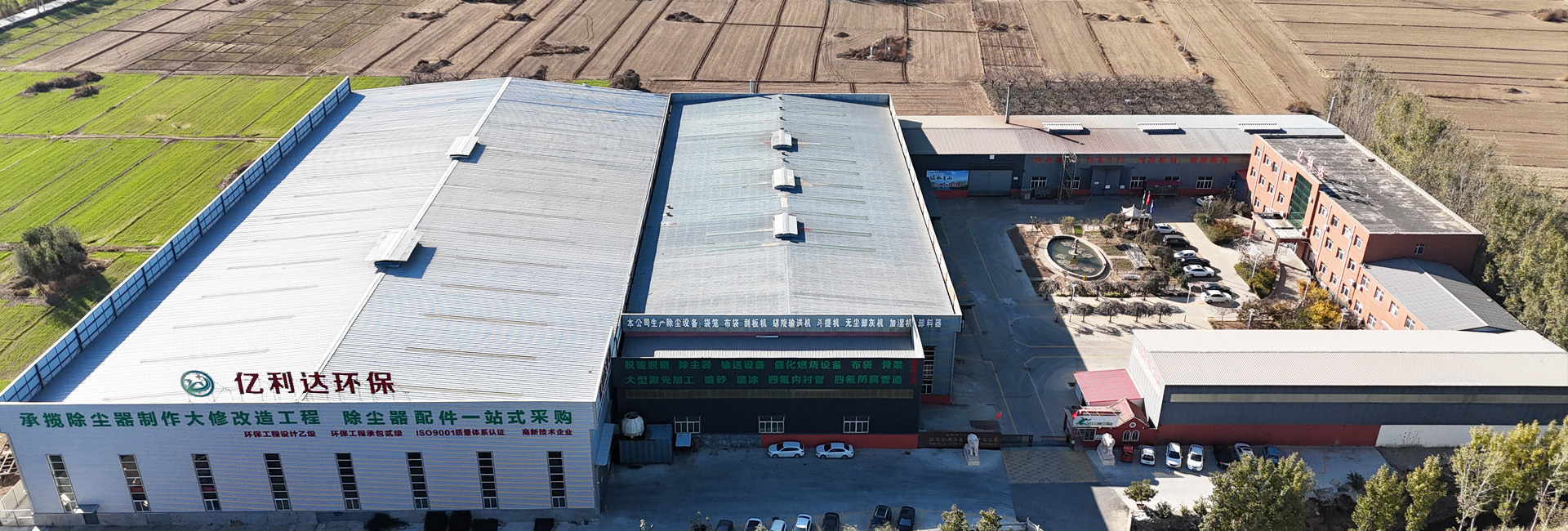
A large offline baghouse is the right answer when air volume, dust load, and emission limits leave no room for compromise. Its chamber-by-chamber cleaning delivers the stable, low outlet emissions that heavy industry depends on. Botou Yilida Environmental Protection Machinery Equipment Co., Ltd. designs and manufactures offline baghouses, pulse bag filters, and full dust removal accessory packages tailored to cement, steel, power, and chemical applications. For a specification matched to your gas volume, temperature, and local emission standard, reach out to the Yilida technical team at www.yilida-dustcollectors.com.

Copyright © 2025-2026 Botou Yilida Environmental Protection Machinery and Equipment Co., Ltd All Rights Reserved