

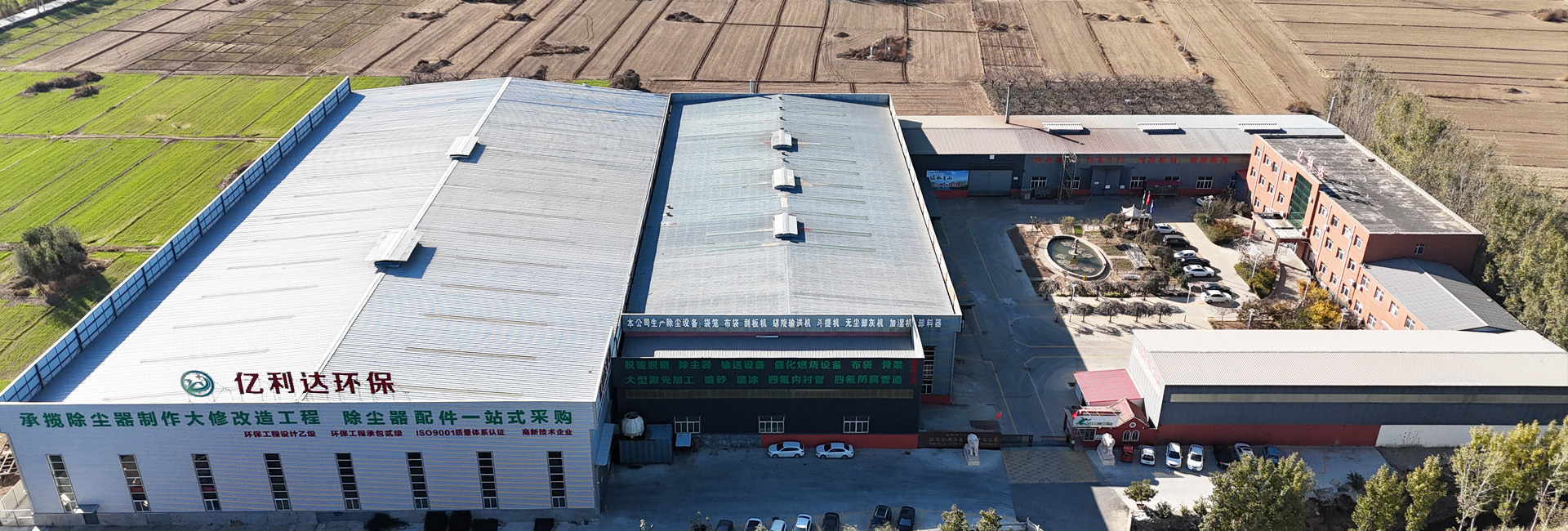
Dust Removal Accessories in Coating and Painting Production Lines
Author:yilida Time:2026-02-11 22:13:01 Number of views:132Second-rate
In modern surface treatment industries, clean environments are essential for high-quality coating and painting. Any airborne particle can affect adhesion, appearance, and durability. That is why dust removal accessories have become a core part of coating and painting production lines. Behind every reliable system is a professional dust removal accessories manufacturer supported by stable factory production capability and scalable bulk supply.
From automotive painting to industrial equipment finishing, dust removal accessories help maintain airflow control, particle filtration, and contamination prevention. This article explores how these accessories function within production lines and how factory manufacturing supports consistent performance.


The Role of Dust Control in Coating and Painting
Coating and painting processes rely on clean, controlled environments. Even microscopic dust can cause surface defects such as pinholes, fisheyes, uneven layers, or weak bonding.
Dust removal accessories are designed to:
·Capture airborne particles
·Maintain clean airflow
·Protect coating surfaces
·Improve adhesion quality
·Reduce rework rates
A professional manufacturer integrates these accessories into production systems to ensure stable output quality, especially for large-scale factory production and bulk supply projects.
What Are Dust Removal Accessories?
Dust removal accessories are auxiliary components used in ventilation, filtration, and airflow management within coating and painting lines.
Common types include:
·Filter cartridges
·Pre-filters and HEPA filters
·Duct connectors and flanges
·Flexible hoses
·Suction hoods
·Airflow regulators
These components work together to collect, transport, and separate dust from the working environment. Factory manufacturing ensures dimensional accuracy and compatibility with different production line layouts.
Function 1: Airborne Particle Capture
The primary function of dust removal accessories is to capture airborne contaminants before they settle on coated surfaces.
Key mechanisms include:
·Negative pressure suction
·High-efficiency filtration
·Local exhaust ventilation
·Controlled air circulation
During production, manufacturers design accessories to balance airflow velocity with filtration efficiency. Factory production lines test pressure resistance and airflow consistency to support stable bulk manufacturing.
Effective particle capture directly improves coating appearance and long-term durability.
Function 2: Maintaining Stable Airflow
Airflow stability is critical in coating and painting environments. Uneven air movement can introduce turbulence and pull dust onto wet surfaces.
Dust removal accessories help:
·Guide air direction
·Regulate suction force
·Reduce dead zones
·Maintain laminar flow
Professional factory production ensures that ducts, connectors, and regulators are manufactured with precise tolerances. This consistency allows manufacturers to support predictable airflow performance across mass production lines.
Stable airflow reduces surface defects and improves finish uniformity.
Function 3: Protecting Equipment and Operators
Dust not only affects product quality but also damages equipment and impacts worker health.
Dust removal accessories contribute to:
·Equipment protection
·Reduced clogging
·Lower maintenance costs
·Improved air quality
·Safer working environments
By integrating durable materials into production, manufacturers ensure accessories resist wear from continuous airflow and abrasive particles. Factory manufacturing systems monitor material quality to support long service life for bulk supply customers.
Function 4: Supporting Efficient Production Workflow
Clean environments increase operational efficiency. When dust is controlled, production interruptions decrease.
Dust removal accessories improve:
·Line stability
·Reduced repainting
·Higher throughput
·Consistent surface results
A dust removal accessories factory aligns production capacity with project demand. Scalable manufacturing ensures accessories are available in large quantities for industrial painting and coating facilities.
Efficiency gains translate directly into cost savings for production operators.
Materials Used in Dust Removal Accessories
Material selection influences durability and filtration performance.
Typical materials include:
·Galvanized steel
·Stainless steel
·Aluminum
·Engineering plastics
·Composite filter media
During factory production, manufacturers verify material thickness, surface finish, and chemical resistance. Proper material control ensures dust removal accessories perform reliably under temperature changes, humidity, and chemical exposure in coating lines.
Production Workflow Inside a Dust Removal Accessories Factory
The quality of dust removal accessories depends on production control.
Key factory manufacturing steps include:
1.Raw material inspection
2.Cutting and forming
3.Welding or molding
4.Surface finishing
5.Assembly
6.Functional testing
7.Packaging for bulk supply
Each stage is monitored to maintain dimensional accuracy and airflow performance. A professional manufacturer integrates quality inspection into every production phase to protect consistency across mass manufacturing.
Automation and Digital Control in Manufacturing
Modern dust removal accessories factories increasingly adopt automation.
Benefits include:
·Faster production cycles
·Reduced defect rates
·Stable batch consistency
·Real-time process monitoring
·Scalable bulk manufacturing
Automated systems allow manufacturers to adjust output quickly while maintaining performance standards. This flexibility is essential for large coating and painting projects.
Customization for Different Production Lines
Every coating and painting line is different. Dust removal accessories must match layout, airflow demand, and environmental conditions.
Factory production supports:
·Custom duct dimensions
·Specialized filtration grades
·Modular connections
·Flexible installation solutions
By offering both standard and customized manufacturing, dust removal accessories manufacturers help production facilities optimize cleanliness without redesigning entire systems.
Why Bulk Supply Capability Matters
Large coating operations require consistent replacement and expansion parts.
A professional dust removal accessories factory supports:
·Stable lead times
·Large-volume production
·Inventory management
·Logistics coordination
Bulk supply capability ensures continuous operation for industrial customers, reducing downtime and protecting coating quality across long-term projects.
Applications of Dust Removal Accessories
Dust removal accessories are widely used in:
·Automotive painting lines
·Industrial equipment coating
·Furniture finishing
·Metal surface treatment
·Construction material production
Each application benefits from controlled airflow and contamination prevention supported by professional factory production.
Conclusion: The Strategic Value of Dust Removal Accessories
In conclusion, dust removal accessories are essential for maintaining clean, efficient, and high-quality coating and painting production lines. They capture airborne particles, stabilize airflow, protect equipment, and support efficient workflows.
By combining advanced factory manufacturing systems with scalable production capability, a dust removal accessories manufacturer ensures reliable bulk supply for industrial coating environments.
For any surface treatment operation, investing in high-quality dust removal accessories backed by professional production and factory control is the foundation for cleaner finishes, higher efficiency, and long-term operational success.
References
GB/T 7714:Hinds W C, Zhu Y. Aerosol technology: properties, behavior, and measurement of airborne particles[M]. John Wiley & Sons, 2022.
MLA:Hinds, William C., and Yifang Zhu. Aerosol technology: properties, behavior, and measurement of airborne particles. John Wiley & Sons, 2022.
APA:Hinds, W. C., & Zhu, Y. (2022). Aerosol technology: properties, behavior, and measurement of airborne particles. John Wiley & Sons.