

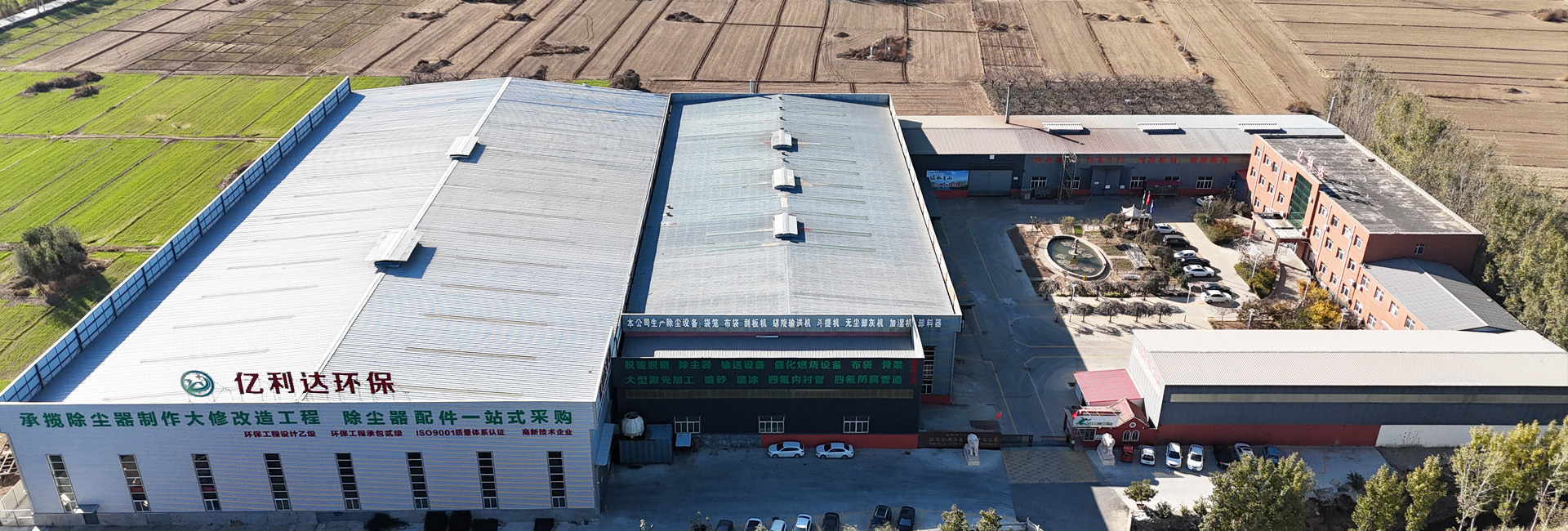

- Botou Yilida Environmental Protection Machinery and Equipment Co., Ltd
- Contact:Ms. Zhang
- Email: yilida@yilida-dustcollectors.com
- Add: Xiaoyuan Village, Qiqiao Town, Botou City, Cangzhou City, Hebei Province
Author:yilida Time:2026-08-25 17:22:18 Number of views:80Second-rate
A cement plant's raw meal handling relied on a bucket elevator rising 40 meters to feed the preheater. One morning the elevator stopped; the maintenance crew found a jammed bucket had torn a chain, and the cascade of falling buckets had wedged in the boot. The repair took three days and the lost production cost more than the elevator had cost to build. The root cause was mundane: a single bucket bolt had loosened, the bucket dragged, and the lack of a belt/chain misalignment monitor let it escalate into a full cascade.
Bucket elevators are the vertical backbone of bulk solids handling — moving dust, powder, and granular material from ground level to silos, hoppers, and process vessels that screws and belts cannot reach efficiently. They are robust but unforgiving: a small fault at the bottom can become a major failure at the top. This article covers how to select, size, and maintain them for industrial dust handling.
A bucket elevator consists of a series of buckets attached to a belt or chain that travels in a vertical (or steeply inclined) trunking. Material is fed into the buckets at the bottom (the "boot"), carried up, and discharged at the top by centrifugal force (centrifugal design) or by inversion (continuous design). For dust collection systems, bucket elevators often receive dust from a screw conveyor at the boot and lift it to a silo or reprocessing feed point.
The elevator's advantages are high lift height in a small footprint and enclosed, dust-tight transport. The risks are mechanical: belt or chain failure, bucket detachment, and — for combustible dust — the potential for a devastating explosion if ignition occurs inside the enclosed trunking.
The buckets are spaced apart on a high-speed belt or chain. At the head (top), centrifugal force throws the material out of the bucket into the discharge throat. This design runs at higher speed (typically 1–4 m/s belt speed) and suits free-flowing, non-fragile, granular, and powdery materials — exactly the profile of most collected industrial dust. The buckets dig material from the boot (they can operate partially submerged), which is why centrifugal elevators are also called "centrifugal digging" elevators.
The advantage is high capacity in a compact trunk. The disadvantage is that fragile or easily aerated materials can be thrown prematurely or create dust clouds inside the trunk.
The buckets overlap (no gaps) on a slower belt or chain. Material is discharged by the bucket inverting and the next bucket acting as a deflector, so material flows gently over the preceding bucket's back into the discharge. Running at lower speed (typically 0.5–1.5 m/s), continuous elevators suit fragile, friable, or sticky materials and generate less dust. The trade-off is lower capacity per trunk size and the need for precise bucket geometry.
A specialized design using twin chains and a tripping mechanism to positively eject material, used for very sticky or difficult materials. Less common in dust handling but relevant for cohesive industrial dusts.
Pressed steel buckets: Common, economical, available in many shapes (rounded bottom, flat bottom). Suit most industrial dusts.
Fabricated/ribbon buckets: For abrasive or high-temperature material, with reinforced edges.
Plastic / nylon buckets: For food, pharmaceutical, or corrosive applications where metal contact is undesirable and temperatures permit.
High-temperature buckets: For hot dust (above 150°C), using heat-resistant steels and belts rated for the service.
Bucket spacing, width, and depth determine pocket volume; these are selected from the capacity requirement and the material's bulk density and flow characteristics.
Volumetric capacity:
Q = n × V_bucket × v × η_fill × ρ_bulk
Where n is the number of buckets per meter of belt/chain, V_bucket is the bucket volume, v is belt/chain speed, η_fill is the fill factor (typically 0.6–0.9 for centrifugal, lower for continuous), and ρ_bulk is bulk density. The design must handle peak feed from the upstream screw conveyor with margin, and the boot must be fed at a controlled rate to avoid overloading the buckets (which causes spillage back into the trunk — a major wear and hazard source).
Higher speed means more capacity but more dust generation, more wear, and greater risk of belt/chain and bucket stress. For abrasive industrial dust, conservative speeds extend life. Match speed to the discharge type: centrifugal needs the higher end; continuous needs the lower end.
Belt elevators: Quieter, lighter, lower maintenance, and suited to non-abrasive, moderate-temperature dust. Belt elevators cannot run in high heat (belt limits ~120–150°C standard, higher with special belts).
Chain elevators: Heavier, tolerate higher temperatures and abrasive loads better, and suit heavy or hot industrial dust. Chain wear and elongation require tension monitoring and periodic adjustment or replacement.
This is the most safety-critical aspect of bucket elevators handling combustible dust. The enclosed vertical trunk is a classic dust explosion scenario: a dust cloud forms inside, an ignition source (often a belt/chain friction heat, a seized bearing, or foreign material) initiates deflagration, and the trunk confines the pressure.
Key protections per NFPA 61/654/484:
Explosion venting: Vent panels on the trunk and head discharge the pressure to a safe location. Sizing follows NFPA 68.
Rotation/ motion monitoring: Belt/chain speed and alignment monitors that trip the drive on slowdown or misalignment — preventing the cascade failure that starts fires.
Temperature monitoring: Bearing temperature sensors at head and boot that alarm on overheating.
Foreign material exclusion: Magnetic separators or screens upstream to keep tramp metal out of the boot, where it can jam and create friction heat.
Gas inerting: For the highest-hazard dusts, nitrogen purging keeps oxygen below the ignition threshold inside the trunk.
Static grounding: All metallic components grounded to prevent static discharge ignition.
The most catastrophic: a belt snaps or a chain breaks, dropping all buckets. Caused by overload, misalignment, worn splice, or a jam that exceeded the tensile limit. Mitigation: motion monitors, proper tensioning, scheduled splice/link inspection, and controlled feed.
Loose or broken bucket bolts allow buckets to detach and jam in the boot or head, often triggering a cascade. Mitigation: torque-checked bolts on a schedule, bolt material suited to the service, and boot clearance inspection.
Overfeeding the boot causes material to pile up, the buckets dig into a static pile (increasing load), and spillage accumulates in the trunk, abrading the belt/chain and creating a dust layer that is both a wear source and an explosion fuel reservoir. Mitigation: controlled, metered feed matching elevator capacity.
Head and boot bearings run in dusty, often hot conditions. Seal failure lets dust in; the bearing overheats and can ignite combustible dust. Mitigation: sealed, purged, temperature-monitored bearings with scheduled lubrication.
Motion and alignment monitoring: Verify belt/chain speed and tracking daily; alarm on deviation.
Temperature checks: Head and boot bearing temperatures trended; investigate rising trends immediately.
Bucket and bolt inspection: Periodic visual check for loose, damaged, or missing buckets and bolts.
Tension verification: Maintain correct belt/chain tension; too loose causes slip and misalignment, too tight accelerates wear.
Boot cleaning: Keep the boot clear of accumulated material; a clean boot prevents overload and spillage.
Vent panel integrity: Verify explosion vent panels are intact and unobstructed.
In a typical dust collection material recovery loop: dust collector hoppers → rotary airlock → screw conveyor → bucket elevator boot → lift to silo or reprocessing. The elevator is the vertical link. Its capacity must exceed the screw's delivery rate, its feed must be metered to avoid boot overload, and for combustible dust it must be included in the facility Dust Hazard Analysis with appropriate explosion protection. The elevator's enclosed design makes it both ideal for dust-tight handling and a focus for explosion safety.
Bucket elevators are the most efficient way to move industrial dust and bulk solids vertically, but they concentrate risk: a small fault at the bottom can cascade into major failure at the top. The plants that run them reliably do three things consistently — control the feed, monitor motion and temperature, and maintain the buckets and bearings on schedule.
For combustible dust, explosion protection is not optional and not a box-ticking exercise; it is engineered into the trunk, the monitoring, and the operating procedure. Specified and maintained correctly, a bucket elevator will lift your material for a decade; neglected, it will remind you of its importance in the worst possible way.
Our factory designs and manufactures bucket elevators — centrifugal and continuous, belt and chain — in carbon and stainless steel, with abrasion-resistant buckets and integrated explosion protection options, for vertical lifting of industrial dust and bulk solids in dust collection and material handling systems.
CEMA (Conveyor Equipment Manufacturers Association). "CEMA Standard 250: Classification and Definitions for Bucket Elevators."
CEMA (Conveyor Equipment Manufacturers Association). "CEMA Standard 350: Screw Conveyors for Bulk Materials," 6th Edition (elevator chapters).
National Fire Protection Association (NFPA). "Standard for the Prevention of Fires and Dust Explosions in Agricultural and Food Processing Facilities." NFPA 61, 2020 Edition.
National Fire Protection Association (NFPA). "Standard for the Prevention of Fire and Dust Explosions from the Manufacturing, Processing, and Handling of Combustible Particulate Solids." NFPA 654, 2023 Edition.
National Fire Protection Association (NFPA). "Standard on Explosion Venting Protection." NFPA 68, 2018 Edition.
American Society of Mechanical Engineers (ASME). "ASME B20.1: Safety Standard for Conveyors and Related Equipment."
Copyright © 2025-2026 Botou Yilida Environmental Protection Machinery and Equipment Co., Ltd All Rights Reserved